






Is your legacy system becoming a risk? Take a 2-min check

A quick 2-minute check to assess the risk of keeping a business-critical legacy system as-is and the likely size of a future modernization effort — with instant results and no email required.
Legacy systems do not become risky simply because they are old. The warning signs are usually more practical: vendor support is ending, critical knowledge sits with one or two people, documentation is falling behind, releases are slowing down, or even small changes are becoming harder to predict.
Those same factors can also make a future modernization effort more complex.
To make that first assessment easier, WaveAccess has launched the Legacy Risk Check — a short online assessment for teams running business-critical legacy software.
Two scores, one clearer view of your modernization priorities
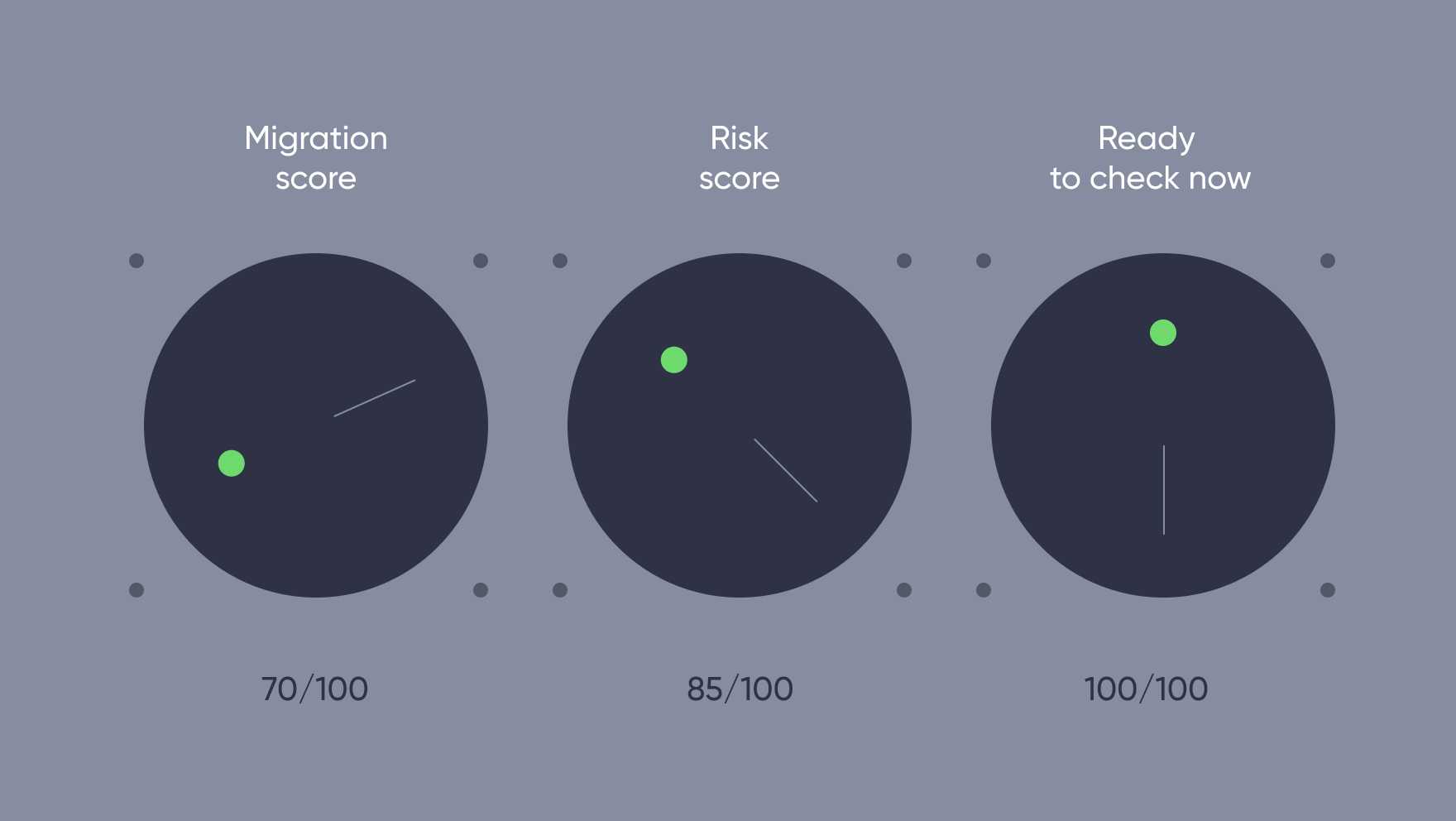
In about two minutes, 11 questions help assess two things separately:
- Risk Score — how much exposure there is in keeping the current system as-is;
- Migration Size — how substantial a future modernization effort is likely to be.
Looking at the two separately gives a more useful starting point for modernization planning. A system may carry considerable risk today without necessarily requiring a large migration, while another may be relatively stable but still involve a substantial modernization effort when the time comes.
What the Legacy Risk Check looks at
The assessment covers practical factors including the technology stack and end-of-support exposure, codebase and data size, documentation, concentration of system knowledge, release stability, and the number of users who depend on the system.
These are the kinds of dependencies and constraints that need to be understood before a modernization scope, timeline, or approach can be defined with confidence.
Get an initial assessment in about two minutes
You see your Risk Score and Migration Size immediately after completing the 11 questions.
The check is intended as a quick first assessment rather than a replacement for technical discovery. It can help show where the main concerns may lie and whether a deeper look at the system should be the next step.


