Giving AI coding assistants better context in large enterprise codebases

AI coding assistants can read individual files, but large enterprise codebases are harder to understand through text search alone because the important question is often how the code is connected. WA-V-Index adds that context through semantic search, a knowledge graph, and AST-based indexing.
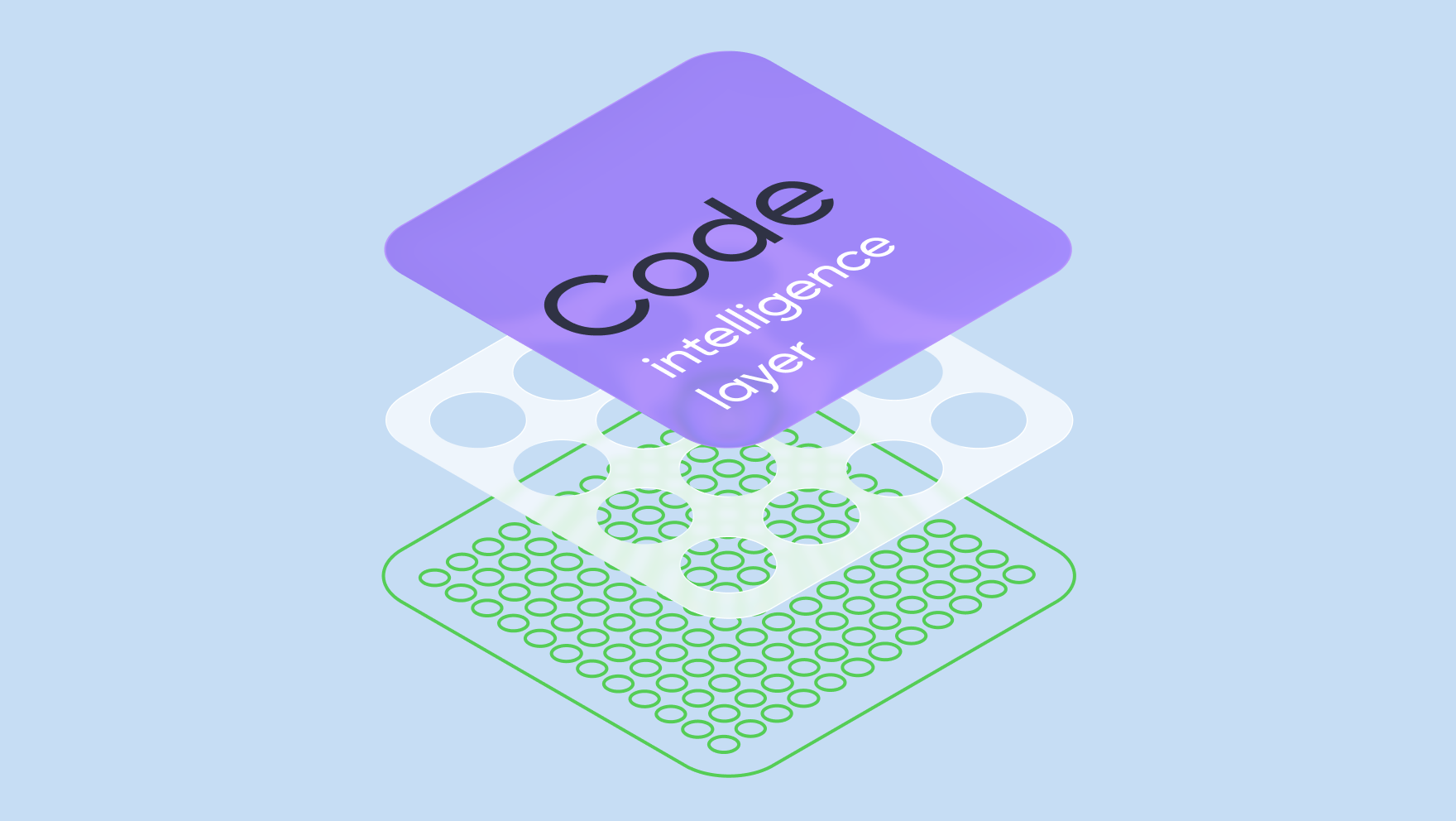
AI coding assistants can read individual files, but text search alone becomes limiting in a large enterprise codebase.
Ask “how does authentication work?” and a grep-style search may return hundreds of matches across middleware, CSS files, comments, tests, deprecated modules, utility functions, and unrelated mentions. The useful questions go further: where the capability is implemented, which component owns the flow, what the dependency paths around it look like, and what may be affected if it changes.
That is why we built WA-V-Index, an indexing layer that combines semantic search with a knowledge graph.
Finding concepts and seeing how the code is connected
Semantic search helps find relevant concepts even when the wording in the code differs from the wording in the query. The knowledge graph shows relationships between functions, modules, interfaces, imports, and dependencies.
The index is built specifically for code rather than treating source files as ordinary text. WA-V-Index uses AST-based chunking, so classes, functions, and methods remain meaningful instead of being split across arbitrary line windows.
Using the index through MCP
Through MCP, an assistant such as Claude Code can use the index for:
- semantic search
- call hierarchy
- dependency exploration
- impact analysis
This gives the assistant structured information about both the code itself and the relationships around it.
Performance in internal use
In our internal use, the first indexing pass reached around 1,000 files per minute on a MacBook Pro M1. A 50,000-file project took about 50 minutes to index, while incremental updates usually took seconds.
In informal checks, relevant results appeared in the top five in more than 80% of cases.
Running the index locally
The indexing layer can run locally. Whether retrieved snippets leave the environment depends on how the assistant itself is deployed.
Impact analysis still needs engineering review
WA-V-Index does not make impact analysis perfect. Dynamic imports, reflection, runtime configuration, generated code, and event-driven flows still require engineering review.
For large enterprise codebases, grep alone is not enough; AI assistants also need structured context about how the code is connected.