De-risking a low-code migration with AI-assisted legacy discovery

How do you move a business-critical application when the documentation is outdated and key logic depends on scarce platform expertise? WaveAccess used AI-assisted discovery to recover the application's business logic, data model, and user workflows, and then applied engineering validation to create a reliable foundation for migration to a modern platform.
Client profile
A large organization managing a broad portfolio of properties, operational sites, and associated workflows relied on internal applications for daily asset-related operations, data management, and coordination across multiple teams.
Why the legacy application became a business risk
A business-critical application had been built on Visual LANSA, a low-code platform with its own language, visual forms, and platform-specific logic. The client needed to move to Microsoft Power Platform without losing established business rules, data, or user journeys.
The age of the technology was only part of the problem. Documentation was incomplete, Visual LANSA specialists were increasingly scarce, and some application behavior existed outside conventional text-based code, which meant that a direct rewrite could reproduce visible screens while losing hidden rules and dependencies.
Why code conversion alone was not enough
The source of truth was distributed across code fragments, exported forms, the data structure, visual screen flows, and user explanations, so no single source described the application completely.
LLMs could analyze textual artifacts effectively, while visual and binary context still required an experienced engineer to reconstruct relationships, verify interpretations, and combine fragmented evidence into a coherent application model.
How WaveAccess used AI to recover business logic
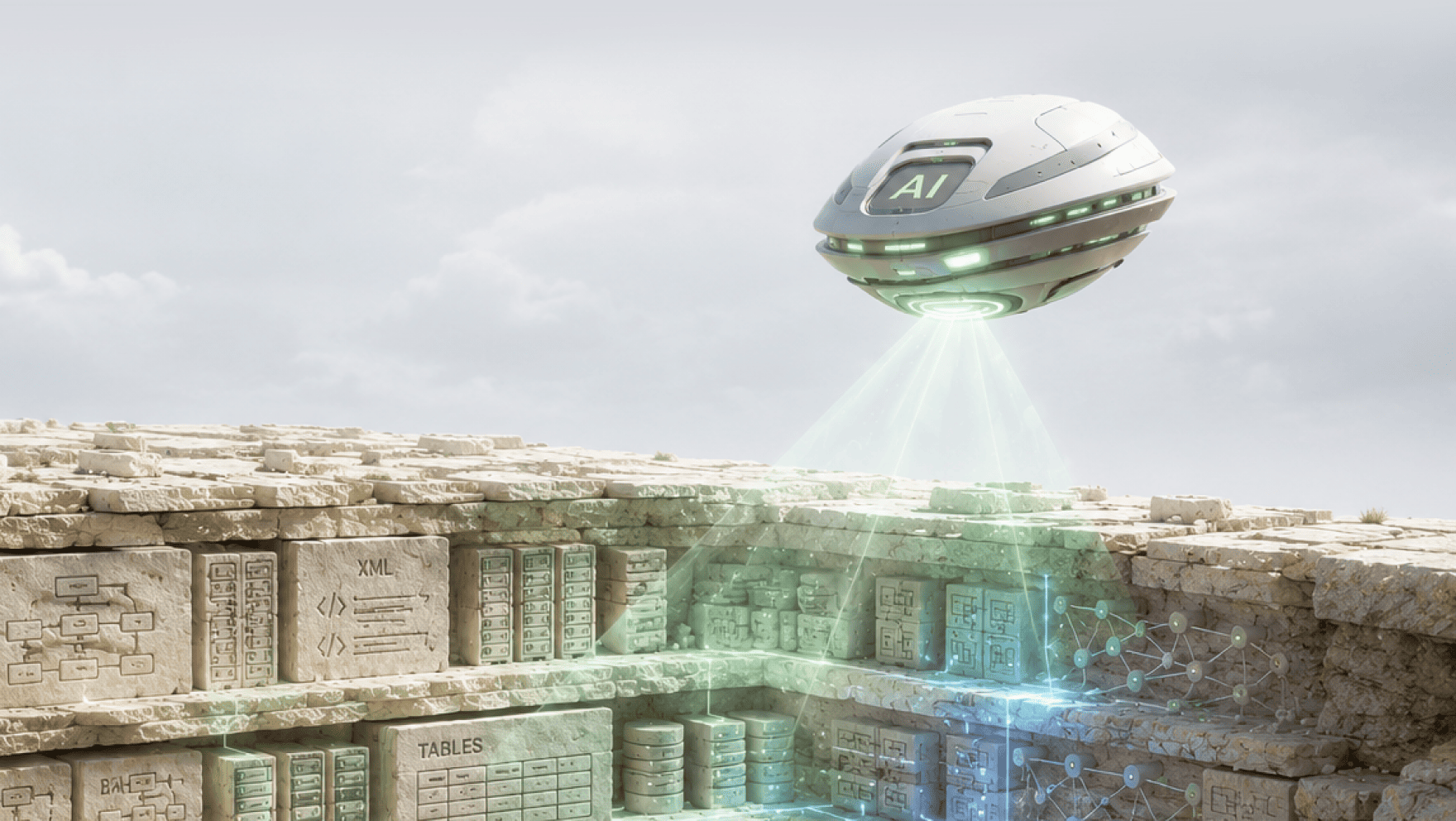
Before selecting the target architecture, the team used AI-assisted discovery to understand how the legacy application actually worked and create a reliable basis for migration planning.
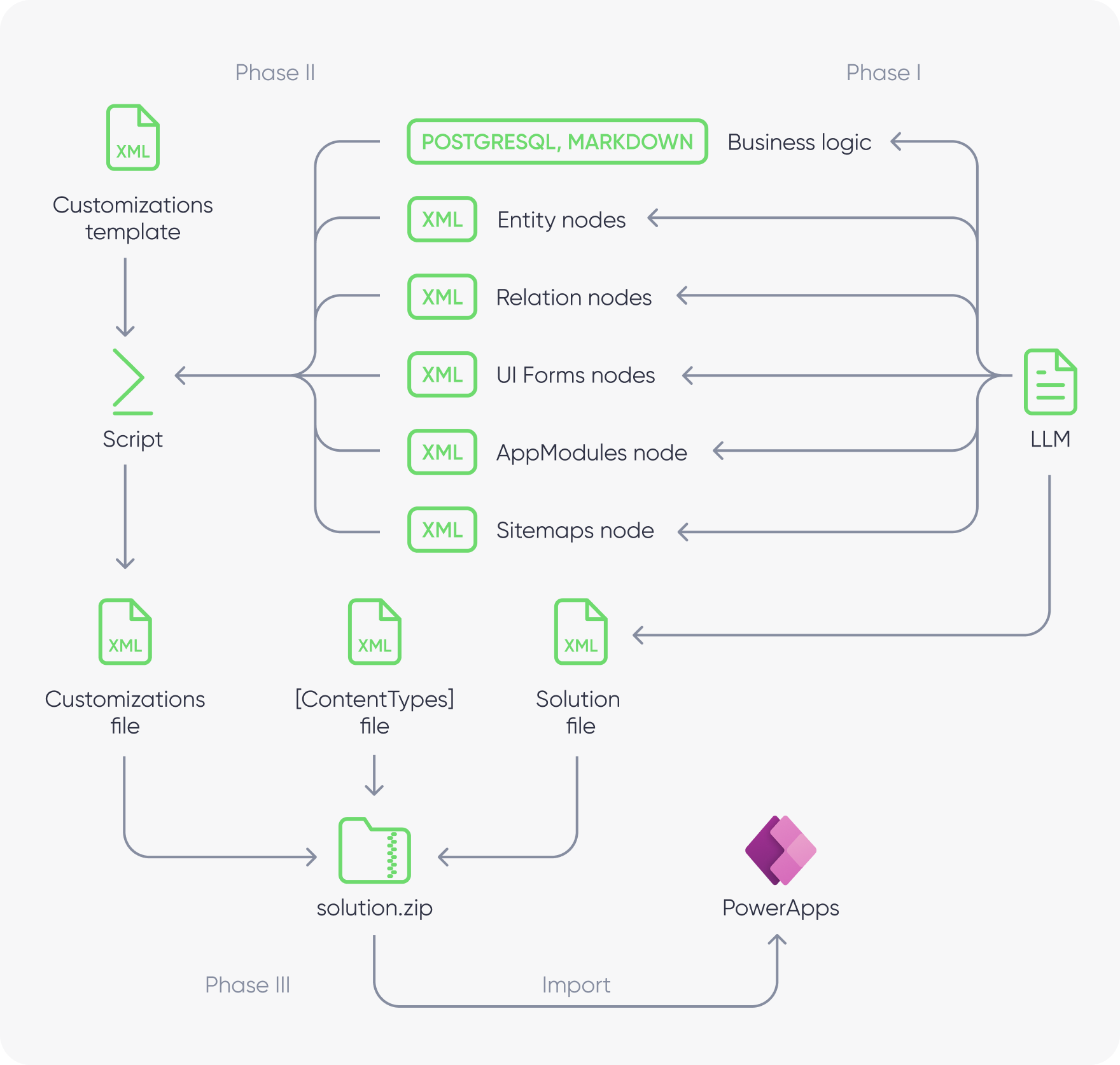
AI tools helped identify the application structure, business rules, user workflows, and data model. The findings were converted into technology-agnostic specifications that could be reviewed with the client independently of both the source and target platforms.
AI was also used to prepare technical artifacts for structuring data and importing components into Microsoft Power Platform, with every output checked against source forms, exports, user explanations, and known system behavior. An architect or senior engineer reviewed the findings at every stage.
The engagement was designed to validate feasibility and create a solid basis for the next phase, not deliver a completed production migration.
Business outcome
WaveAccess recovered and structured the application’s business logic, data model, and user workflows, confirming the feasibility of further modernization, reducing migration risk, and creating a reliable basis for estimating scope and planning the next phase.
Knowledge previously scattered across the codebase, visual components, and individual experience was consolidated into a reviewable form, reducing dependence on scarce platform expertise during later stages.
Working with the client, the team decided which functions to retain, update for current processes, or leave behind after checking dependencies across functions, data, and user workflows to avoid disrupting related processes.
This selection is part of WaveAccess's controlled modernization approach: unused functionality is not migrated automatically, and the target scope is agreed with the client.
The resulting functional foundation is more current and easier to understand, which supports smoother user adoption and can lower future maintenance costs by avoiding outdated features in the new system.
What AI-powered legacy application modernization means
Legacy application modernization is the process of moving a business-critical system to a modern architecture while preserving the business logic that still matters. WaveAccess uses a controlled engineering workflow: define scope, extract metadata from code and related artifacts, recover and validate business rules, select the target architecture, build the new system, test it, and hand it over.
AI accelerates analysis, specification preparation, component generation, testing, and documentation. Architecture and quality remain under engineering control. Depending on system complexity, source-code quality, and validation requirements, the approach can deliver working components about twice as fast and reduce modernization costs by 50-80% compared with a fully manual rewrite.